Rick Moranis Is Back: The Spaceballs Return Nobody Saw Coming
Rick Moranis Is Back: The Spaceballs Return Nobody Saw Coming
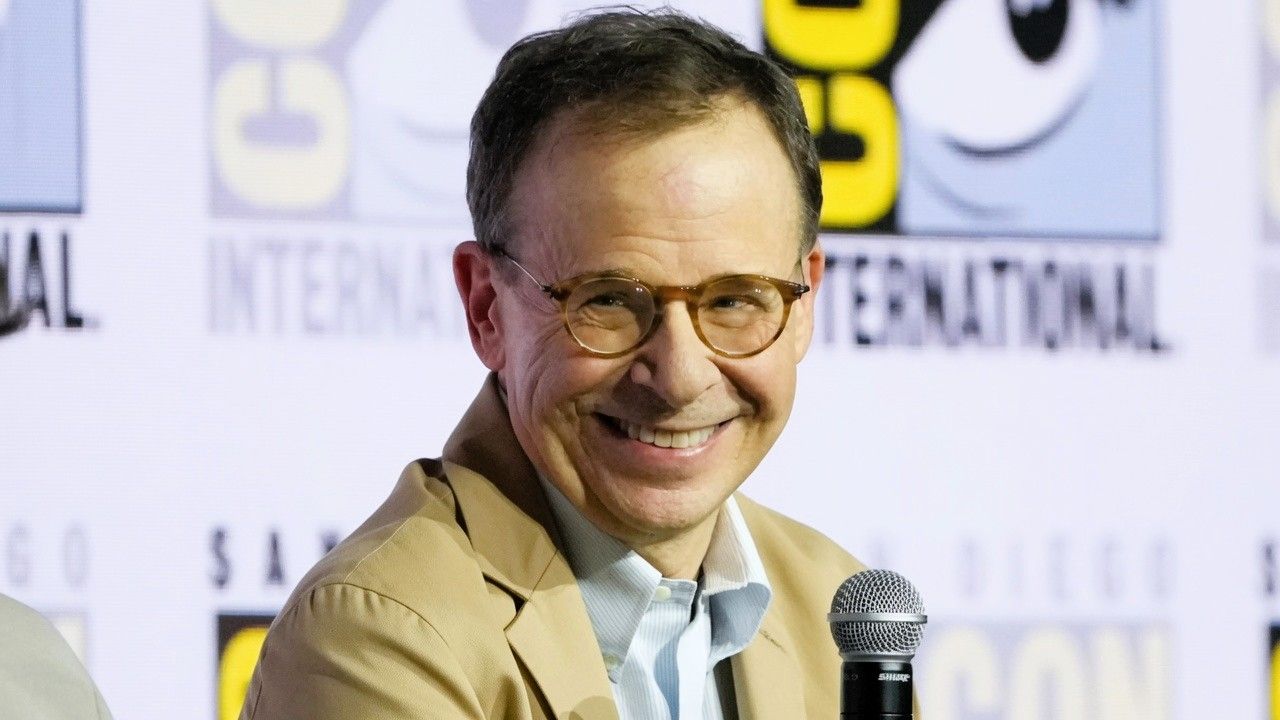
A line of Spaceball troopers entered Hall H at San Diego Comic-Con and began combing the audience. They were not conducting a sophisticated search. They were literally using oversized combs.
For anyone familiar with Mel Brooks’ Spaceballs, the joke required no explanation. Then one particularly large black helmet rose from among the crowd, Rick Moranis appeared beneath it, and the room stood up.
The ovation was not simply for Dark Helmet. It was for an actor many assumed they would never again see occupying this kind of public space, dressed as one of his most beloved characters and willingly participating in the machinery of a major Hollywood sequel.
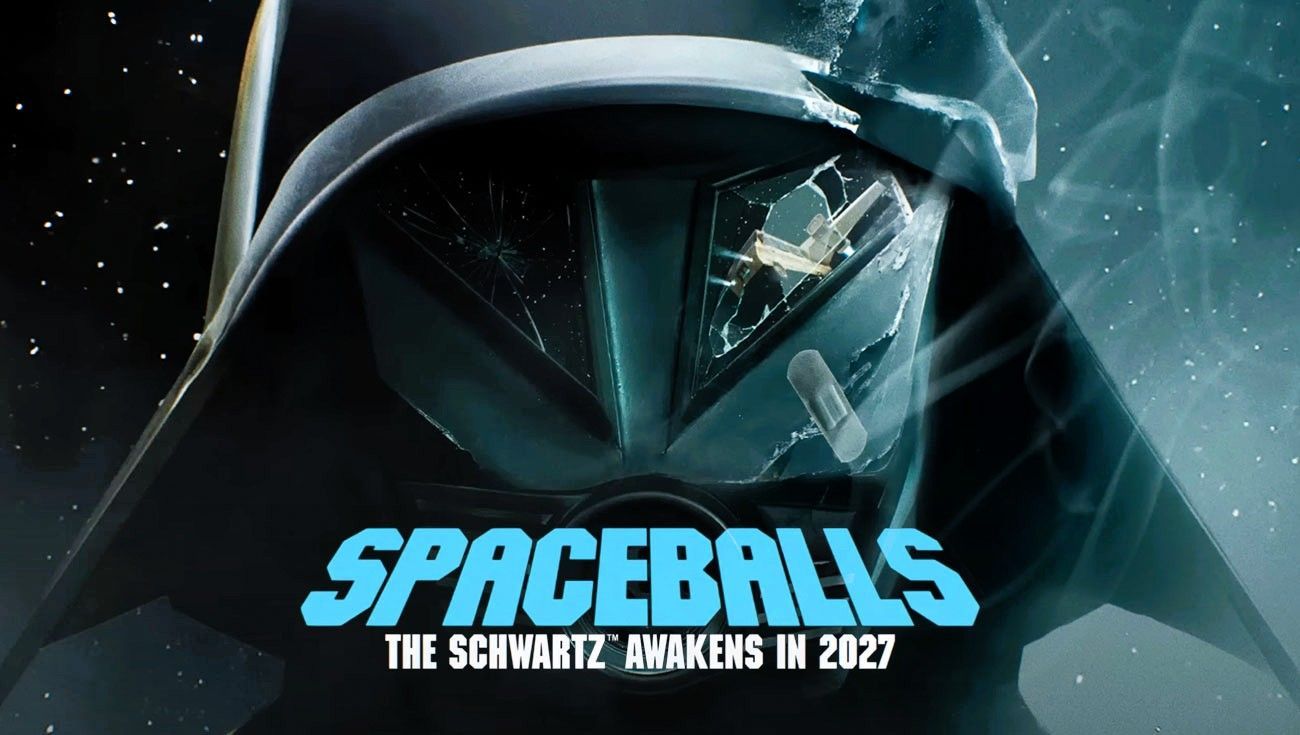
Moranis has returned to live-action film after almost three decades away, reprising Dark Helmet in Spaceballs: The New One, the sequel to Brooks’ 1987 science-fiction parody. The film is directed by Josh Greenbaum and written by Josh Gad, Dan Hernandez and Benji Samit, with Amazon MGM Studios scheduling a theatrical release for 23 April 2027, almost exactly 40 years after the original arrived.
That alone would make the project noteworthy. The wider reunion makes it considerably more intriguing.
Bill Pullman returns as Lone Starr, Daphne Zuniga as Princess Vespa and George Wyner as Colonel Sandurz. Mel Brooks, now 100, reprises both Yogurt and President Skroob. New additions include Keke Palmer, Anthony Carrigan, Josh Gad and Lewis Pullman, who joins his real-life father as Starburst, the son of Lone Starr and Vespa. Gad plays a new mawg character conceived as a tribute to John Candy’s Barf rather than a replacement for him.
The Comic-Con presentation supplied behind-the-scenes footage, a teaser and precisely the kind of controlled chaos expected from this particular universe. The panel even mocked contemporary franchise culture with an absurd fake expansion plan called “The Almighty Schwartz Saga”, turning the modern obsession with phases, interconnected universes and endless extensions into another Brooksian target.
The sequel’s current official title may sound disarmingly plain, but that simplicity is part of the joke. For decades, Moranis and Brooks discussed possible titles including Spaceballs III: The Search for Spaceballs II and Spaceballs 2: The Search for More Money. At Comic-Con, Brooks joked that he had finally found the money.
Forty years later, the merchandise has become the movie.
The Man Who Walked Away

Moranis’s absence has sometimes been described too neatly.
He did not stage a dramatic farewell or announce that he was finished with acting. After his wife, Ann Belsky, died in 1991, he gradually stepped back from live-action work to raise their children. His final live-action feature before this return was Honey, We Shrunk Ourselves in 1997, although he later continued with occasional voice performances. At Comic-Con, he joked that he had never retired and had simply been negotiating for a very long time.
Hollywood loves stories about stars rediscovering the spotlight, but Moranis never seemed particularly consumed by leaving it. He had already built one of the most enviable comedy careers of the 1980s and early 1990s, moving between Ghostbusters, Little Shop of Horrors, Spaceballs, Parenthood and the Honey, I Shrunk the Kids without turning himself into a conventional leading man.
His gift was specificity. Moranis could play nervous, officious, wounded or spectacularly self-important without losing the human being beneath the joke. Dark Helmet remains one of his finest creations because the performance understood that the character’s menace was entirely inseparable from his insecurity. He was Darth Vader filtered through workplace entitlement and arrested development, a tyrant who could threaten planets before retreating to his quarters to play with dolls.
Moranis did not spend the intervening decades endlessly returning to conventions or giving nostalgic interviews, and that absence only strengthened the affection surrounding him. He remained mostly outside the nostalgia economy, which meant that seeing him emerge beneath that helmet carried an emotional charge no marketing department could manufacture.
He later described making the sequel as “the best decision” he had made and compared the experience to returning to family. That sentiment could easily sound promotional coming from another actor. From Moranis, whose distance from the industry was genuine and prolonged, it lands differently.
The Risk Hidden Inside the Reunion

There is still an obvious danger here.
Modern Hollywood has become remarkably efficient at transforming affection into inventory. Every recognisable costume, quotation and musical cue can be extracted, repackaged and sold back to audiences as an emotional event. Spaceballs: The New One enters cinemas during an era when parodying franchise excess is difficult because the parody risks becoming part of the same machine.
The original film mocked Star Wars, Star Trek, Alien, Planet of the Apes and the increasingly commercial logic of blockbuster entertainment. It also mocked itself, most memorably through Yogurt’s shameless promotion of Spaceballs merchandise. What was once a joke about future exploitation now resembles a fairly accurate business forecast.
A sequel arriving 40 years later cannot survive by congratulating the audience for recognising Dark Helmet’s costume. The standing ovation proves the affection exists. Bu it does not prove that the film will work.
That is precisely what makes Moranis’s return both valuable and risky. His presence immediately grants the production emotional legitimacy, but it also raises the standard. Bringing him back solely to repeat familiar business would feel less like celebration than extraction.
The good news is that the people involved appear aware of the burden. Josh Gad has spoken publicly about the responsibility of developing a project worthy of Moranis’s return, while Lewis Pullman said he initially resisted joining a sequel so closely tied to his father’s legacy before the script won him over.
While this may not guarantee success, it does suggest that the nostalgia has not been mistaken for a completed screenplay.
A Galaxy Now Overflowing With Targets

Rick Moranis has faced his share of targets before, although the galaxy confronting
Spaceballs: The New One
is considerably more crowded than anything Louis Tully ever had to aim at.
The original
Spaceballs
arrived when the first
Star Wars trilogy was still the dominant reference point for cinematic space opera. The new film inherits a much more crowded galaxy.
There is now a Star Wars prequel trilogy, sequel trilogy, multiple television series, spin-offs and several decades of debate over canon, legacy and ownership. Marvel and DC have turned continuity into industrial infrastructure. Streaming services routinely announce “universes” before individual projects have earned a second season.
For a parody, this is an embarrassment of riches.
The teaser and Comic-Con material already indicate that the sequel intends to aim at modern franchise architecture, with jokes targeting cinematic universes and the endless expansion of intellectual property. What remains unknown is how deeply the film will engage with the Star Wars sequel era or which other contemporary productions will fall into its sights. Plot details are still largely concealed, so any specific list of targets would be pure guesswork.
The more interesting challenge is tonal. Brooks’ best parodies were never collections of references arranged in a row. Young Frankenstein, Blazing Saddles and Spaceballs understood the genres they were dismantling. The jokes worked because the films could speak the language of their targets fluently enough to expose their absurdities.
Modern reference comedy often settles for recognition. A character names something familiar, the audience understands the reference, and the moment is treated as a joke. Spaceballs: The New One needs sharper teeth than that.
There is no shortage of material. The real question is whether it can identify what is genuinely ridiculous about modern franchise culture rather than merely acknowledging that it exists.
Josh Greenbaum Has Inherited a Difficult Helmet

Josh Greenbaum is an interesting choice to take over from Brooks.
His feature work includes Barb and Star Go to Vista Del Mar, a comedy with an unapologetically peculiar rhythm, and the documentary Will & Harper, which demonstrated a much quieter sensitivity toward friendship and personal change. Those projects are very different, but both reveal a filmmaker comfortable letting eccentric people remain eccentric rather than sanding them down for mass approval. That instinct may serve Spaceballs well.
Brooks’ comedy could be broad, childish, intelligent, shameless and formally precise within the same sequence. Reproducing the surface features is easy. Add a ridiculous prop, break the fourth wall and give someone an absurd name. Reproducing the underlying confidence is harder.
Greenbaum also has to direct a film that honours absent performers without trapping itself inside memorial gestures. John Candy, Joan Rivers, Dom DeLuise and Dick Van Patten are no longer here. Gad’s new mawg character has been described as a tribute to Candy’s Barf, which is a sensible approach. Affection becomes uncomfortable when a new performer is asked to impersonate the irreplaceable.
The returning cast offers continuity, while Palmer, Carrigan, Gad and Lewis Pullman give the film a chance to establish a comic identity that extends beyond preservation.
That balance will decide whether this feels like a reunion with a future or a beautifully dressed class photograph.
Comedy Has Changed Too

Few actors embody late-80s and early-90s family comedy quite like Rick Moranis. The challenge is that audiences have changed almost as much as Hollywood itself.
Delayed sequels have enjoyed a remarkably mixed modern history. Some have found a legitimate reason to return, using the passage of time as part of the story rather than an inconvenience to disguise. Others have treated ageing actors as delivery systems for callbacks, surrounding them with younger performers while refusing to confront what has actually changed.

Comedy presents an additional problem because timing itself ages. A joke that landed in 1987 may now feel too slow, too obvious or simply overfamiliar. At the same time, chasing contemporary comic fashion would be equally dangerous. Spaceballs cannot suddenly behave like an algorithmically assembled stream of sarcastic reactions and expect Brooks’ anarchic spirit to survive intact. The answer may lie in confidence.
The original film was willing to stop its own story for a visual gag, argue with its merchandising, watch itself on videotape and turn a desert search into an excuse for men holding novelty combs. It did not anxiously explain its own cleverness. That freedom feels rarer now.
The most valuable thing Greenbaum and his writers can preserve is therefore not a specific joke or costume. It is the original’s willingness to become gloriously stupid in pursuit of something genuinely funny.
Some Returns Carry Their Own Meaning

Rick Moranis did not need this comeback, which may be precisely why it means so much.
He had already stepped outside the industry, raised his family and built a life that did not depend on remaining visible. His return does not feel like a desperate attempt to recover relevance because relevance never appeared to be the point.
He came back because the people, the timing and the project felt right. That gives Spaceballs: The New One something most legacy sequels spend millions trying to simulate: a genuine sense of occasion.
The standing ovation at Comic-Con was an emotional response to history, but the film itself cannot live there. It must use that affection as fuel rather than shelter. It has to be funny enough to justify waking Dark Helmet from his long sleep and unruly enough to mock the very franchise machinery responsible for bringing him back.
While the title promises something new, the cast carries nearly forty years of cinematic memory. Somewhere between those two things lies the movie Spaceballs: The New One now has to become.
Rick Moranis has already made his return. Now comes the harder task of proving the laughter never really left. If it succeeds, Spaceballs: The New One may just become the great comeback story nobody dared to expect.
This feature draws on Amazon MGM’s production and release announcements, trade reporting from Variety and Deadline, and coverage of the 2026 San Diego Comic-Con panel from the Associated Press, Entertainment Weekly and People. Confirmed details include the 23 April 2027 theatrical release, Josh Greenbaum’s direction, the screenplay team of Josh Gad, Dan Hernandez and Benji Samit, and the announced returning and new cast. Plot specifics and the precise range of contemporary films or franchises being parodied remain largely undisclosed, so commentary on those possibilities has been presented as editorial analysis rather than established fact.